 Willem Veldhuyzen
 No Comments
 Apr 15, 2026
Key Takeaways
- IRS penalties and interest accrual continue growing on unpaid back taxes until the balance is fully resolved
- An Offer in Compromise is a settlement request requiring documented proof of income, assets, and ability to pay
- Currently Not Collectible status can suspend collection activity but requires detailed financial disclosure to qualify
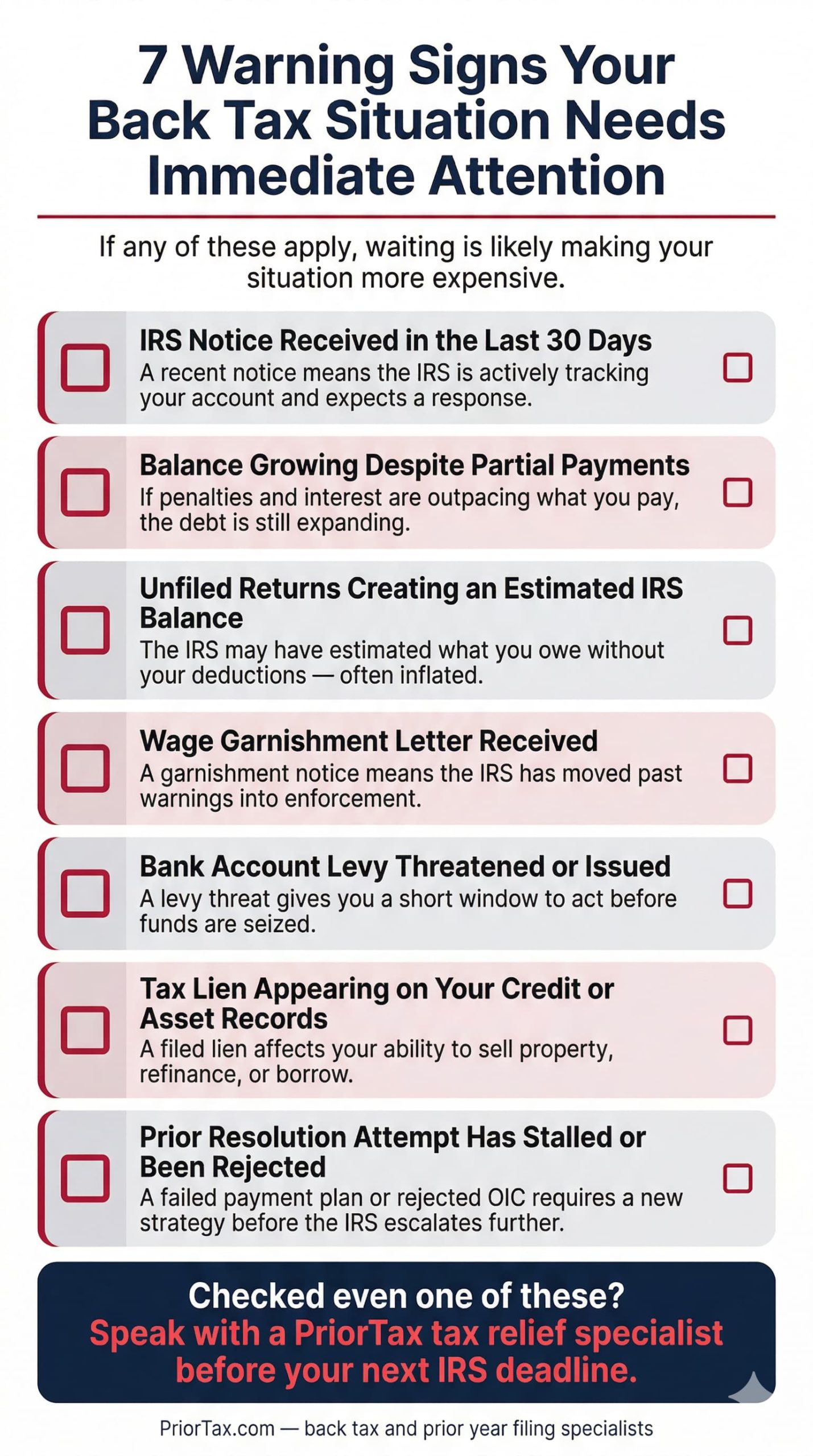
- Ignoring an IRS notice can trigger wage garnishment, bank levy, or tax lien filing on unpaid tax debt
- Unfiled tax returns allow the IRS to estimate what you owe without your deductions, often inflating the bill
- PriorTax helps taxpayers file missing returns accurately and affordably, with transparent pricing and no hidden fees
*updated 6-19-2026
Tax debt rarely stays still.
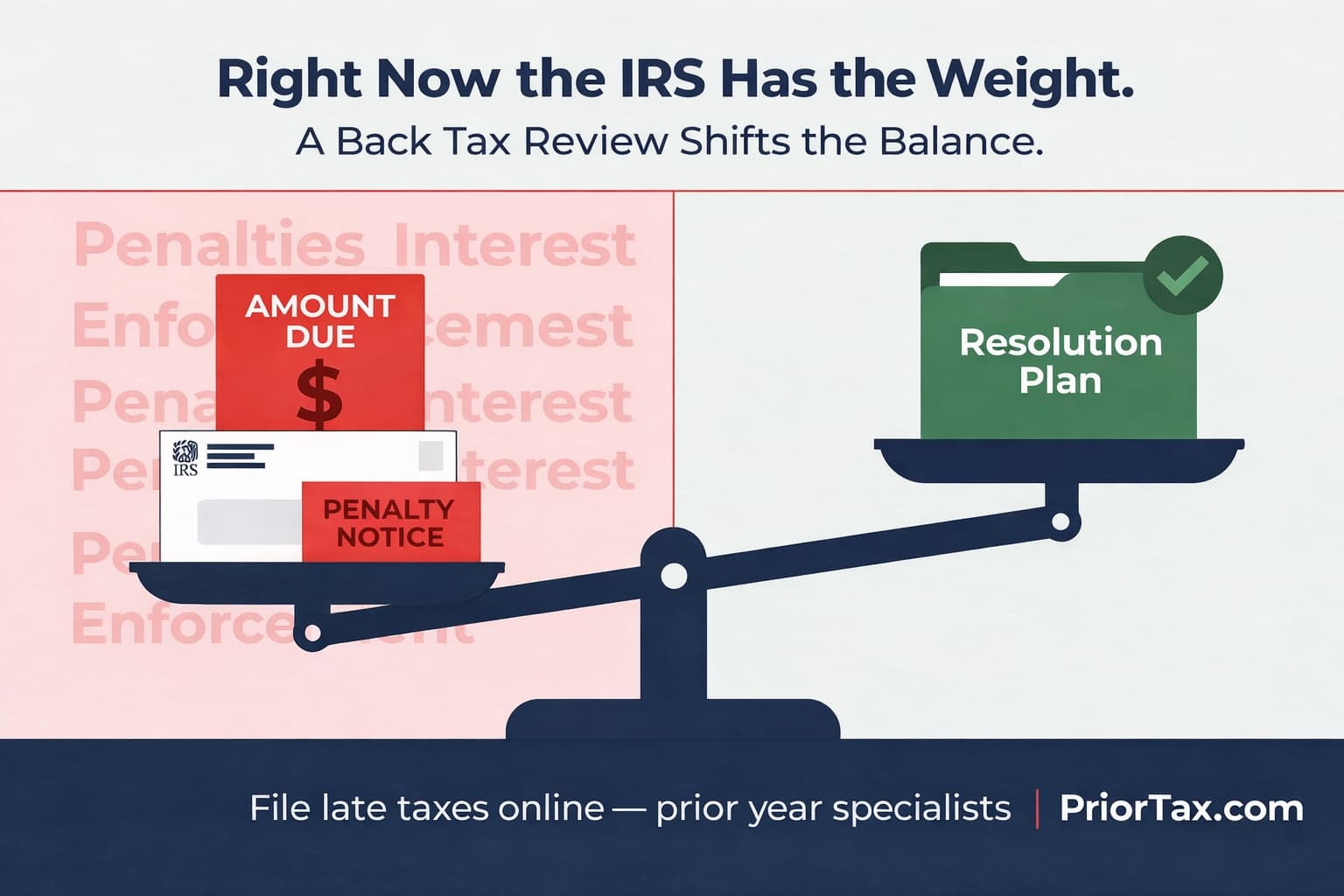
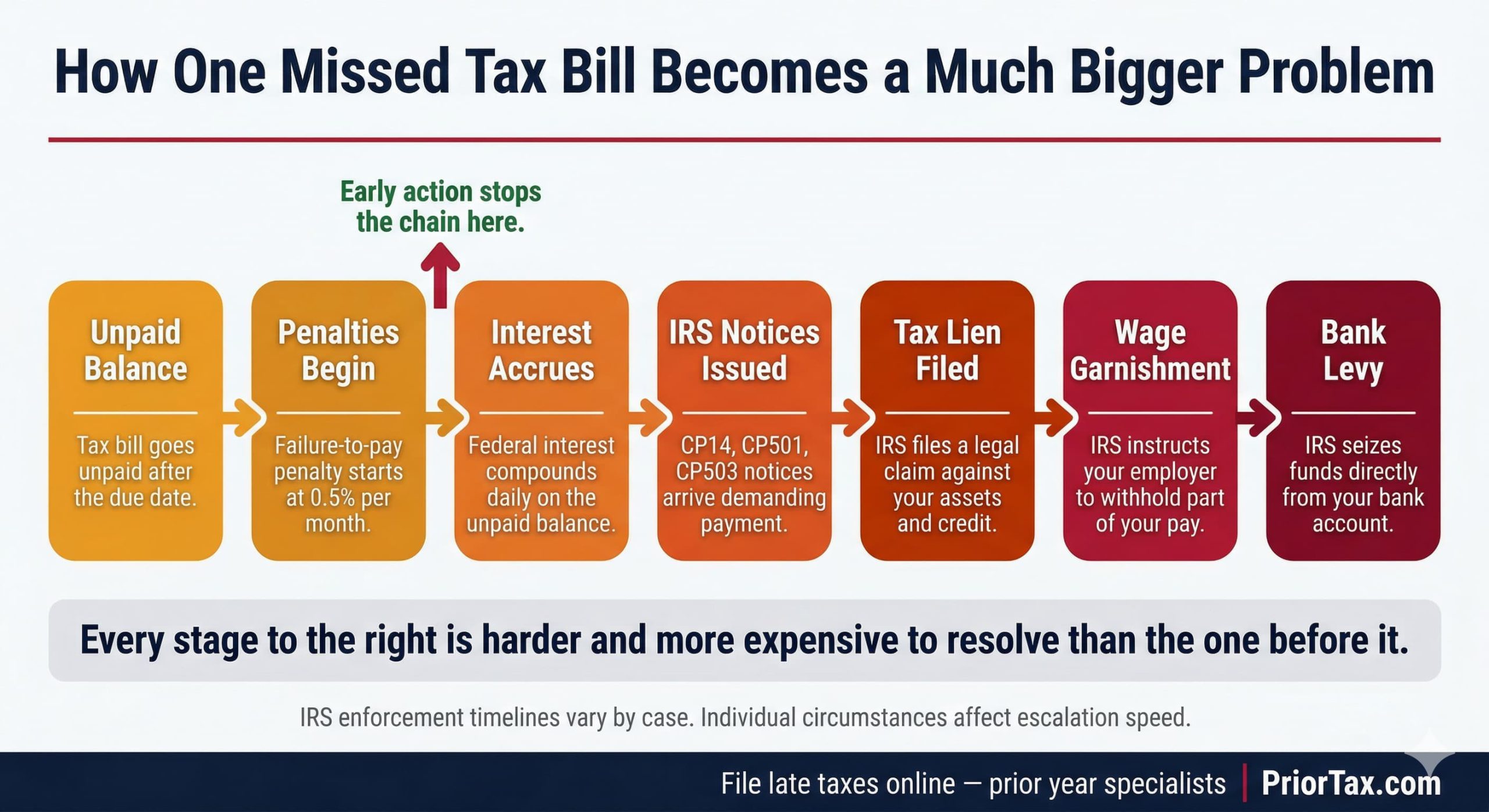
Penalties, interest accrual, and collection activity can turn one missed tax bill into a larger problem fast.
If you need help with back taxes, practical support can make the next step clearer. You can file your past-due taxes online and start resolving the issue today.
A focused review of your IRS notice, unpaid balance, filing status, and deadlines can show which tax relief options are realistic before the pressure gets worse.
Take Control of Back Taxes Before Penalties Grow
Stress rises quickly when IRS letters keep coming, a tax notice deadline is close, or you owe the IRS and cannot pay in full.
Fast action matters because penalty growth, the failure to pay penalty, and interest can increase the balance due, especially if you missed the tax filing deadline and haven’t acted yet. All while IRS enforcement risk builds.
Clear support starts with the facts.
A tax case review can sort out notices, unfiled tax returns, payment pressure, levy threats, wage garnishment concerns, and collection risk so you can move toward a workable plan instead of guessing.
Trusted Guidance for Tax Debt Resolution
Support is available for federal tax debt and state tax debt through licensed tax professionals, credentialed tax representation where applicable, and nationwide assistance built around compliance, accuracy, and timely notice response.
Common Tax Problems We Help Solve
Back taxes show up in different ways, but the pressure usually feels the same. Common issues include unpaid IRS balances, growing penalties and interest, IRS letters about levy action, bank levy or tax lien concerns, and confusion about a payment plan or installment agreement.
Unfiled tax returns create another layer of risk because the Internal Revenue Service may estimate what you owe without your full deductions. Understand what happens if you file taxes late before the problem compounds.
Some taxpayers also need help sorting through hardship status, partial payment options, tax disputes, or whether an IRS Offer in Compromise review makes sense.
Support for IRS and State Back Tax Issues
The right tax resolution plan depends on facts, not guesswork. A proper review looks at your balance due, income, assets, filing history, and ability to pay before any IRS relief program is selected.
That process usually includes case review, document analysis, and a resolution strategy built around compliance. Support may also cover filing missing returns, preparing financial disclosure forms, and handling notice response for both IRS and state tax debt matters.
IRS Payment Plan Assistance
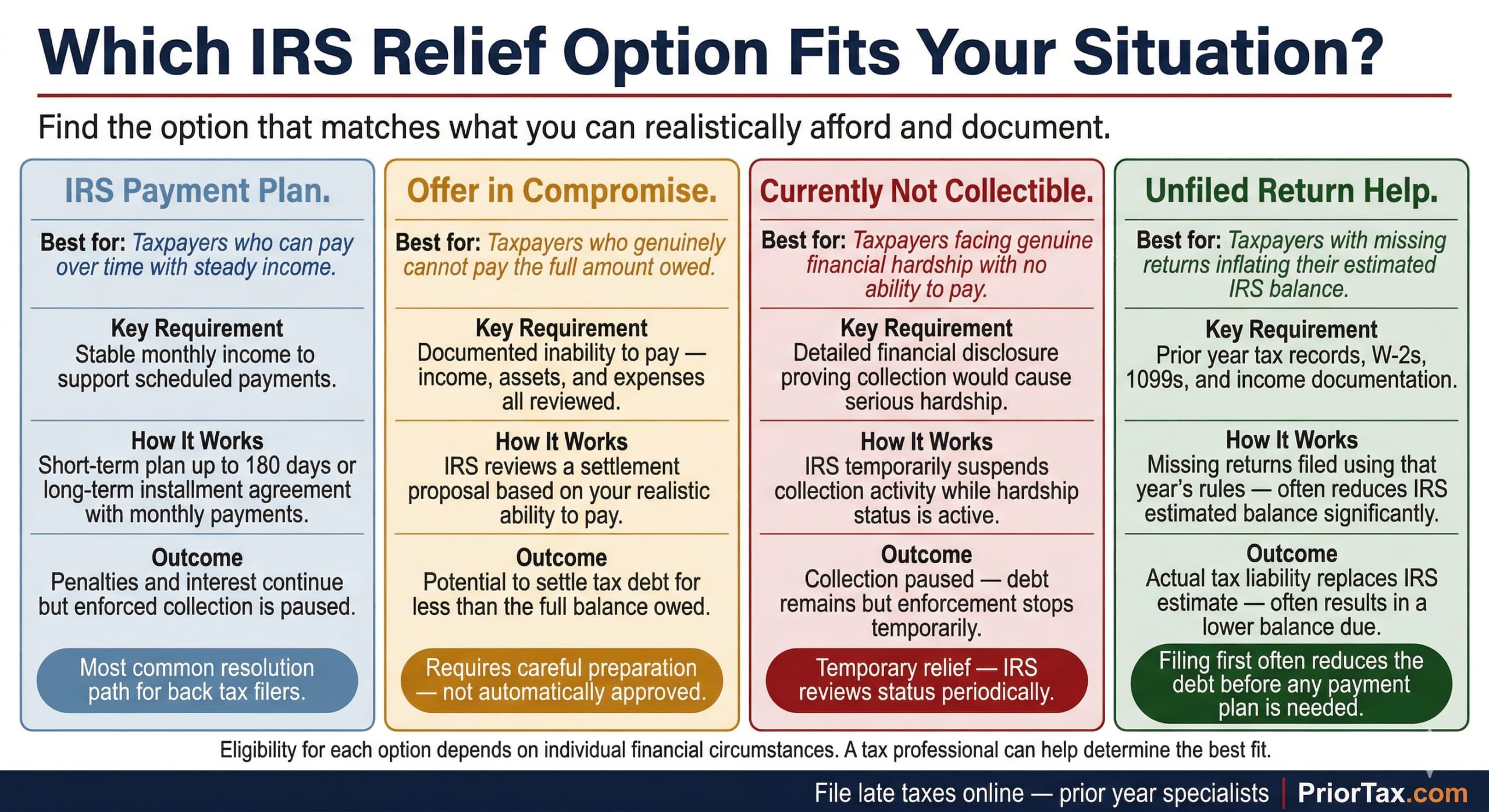
A payment plan can work well when you owe taxes but can pay over time. Help may include reviewing a short-term payment plan, a long-term installment agreement, or an online payment plan, then estimating a monthly payment that fits your budget and IRS rules.
Penalty Abatement and First Time Abatement Relief
Penalties often grow faster than the original tax bill, but the IRS does allow penalty relief in specific situations. Two paths matter most for back tax cases: First Time Abatement and Reasonable Cause relief.
First Time Abatement, sometimes called FTA, is the more common option and is generally granted when basic eligibility is met. The IRS typically looks for three things: a clean compliance history for the prior three tax years, all required tax returns filed or properly extended, and any balance due either paid or set up under a current payment plan or installment agreement. When those conditions are in place, FTA can remove failure-to-file, failure-to-pay, and failure-to-deposit penalties for a single tax year.
Reasonable Cause relief works differently. It applies when something outside your control caused the late filing or late payment, such as serious illness, a natural disaster, or the death of an immediate family member. This path requires written explanation and supporting documentation, so preparation matters more than with FTA.
Penalty abatement does not erase interest accrual on the unpaid balance, and the IRS will continue to charge interest on any tax still owed. Even so, removing penalties can reduce the total balance due meaningfully, especially when failure-to-file penalties have been compounding.
Requesting abatement usually involves either a phone call to the IRS, a written request, or Form 843, depending on the situation and the size of the penalty. A tax professional can review your compliance history, confirm which relief request fits, and prepare the documentation so the request is not denied for a fixable reason. For taxpayers who qualify, this is one of the most accessible forms of IRS relief available.
Offer in Compromise Review
An Offer in Compromise is a settlement request, not automatic tax debt forgiveness. Eligibility depends on ability to pay, assets, income, and documentation, so careful preparation matters before filing.
Hardship and Currently Not Collectible Support
IRS hardship relief may apply when collection would create serious financial hardship.
Currently Not Collectible status can lead to collection suspension, but the IRS usually requires detailed financial disclosure and proof.
Unfiled Return and Notice Response Help
Missing a tax return often makes tax debt look worse than it should and how many years of back taxes you need to file affects which resolution path makes sense.
Quick notice response and filing support can reduce confusion, limit escalation, and address the numbers before enforcement expands.
What You Gain From Professional Tax Help
Clarity is the first benefit. You get a direct explanation of available tax relief options, whether that means IRS payments through an installment agreement, a hardship program review, or a closer look at settlement eligibility.
Speed matters too. Professional support can help you answer IRS notices faster, prepare forms correctly, organize financial disclosure documents, and build a structured path back to compliance without guessing which option fits your case.
A Simple Path to Resolution
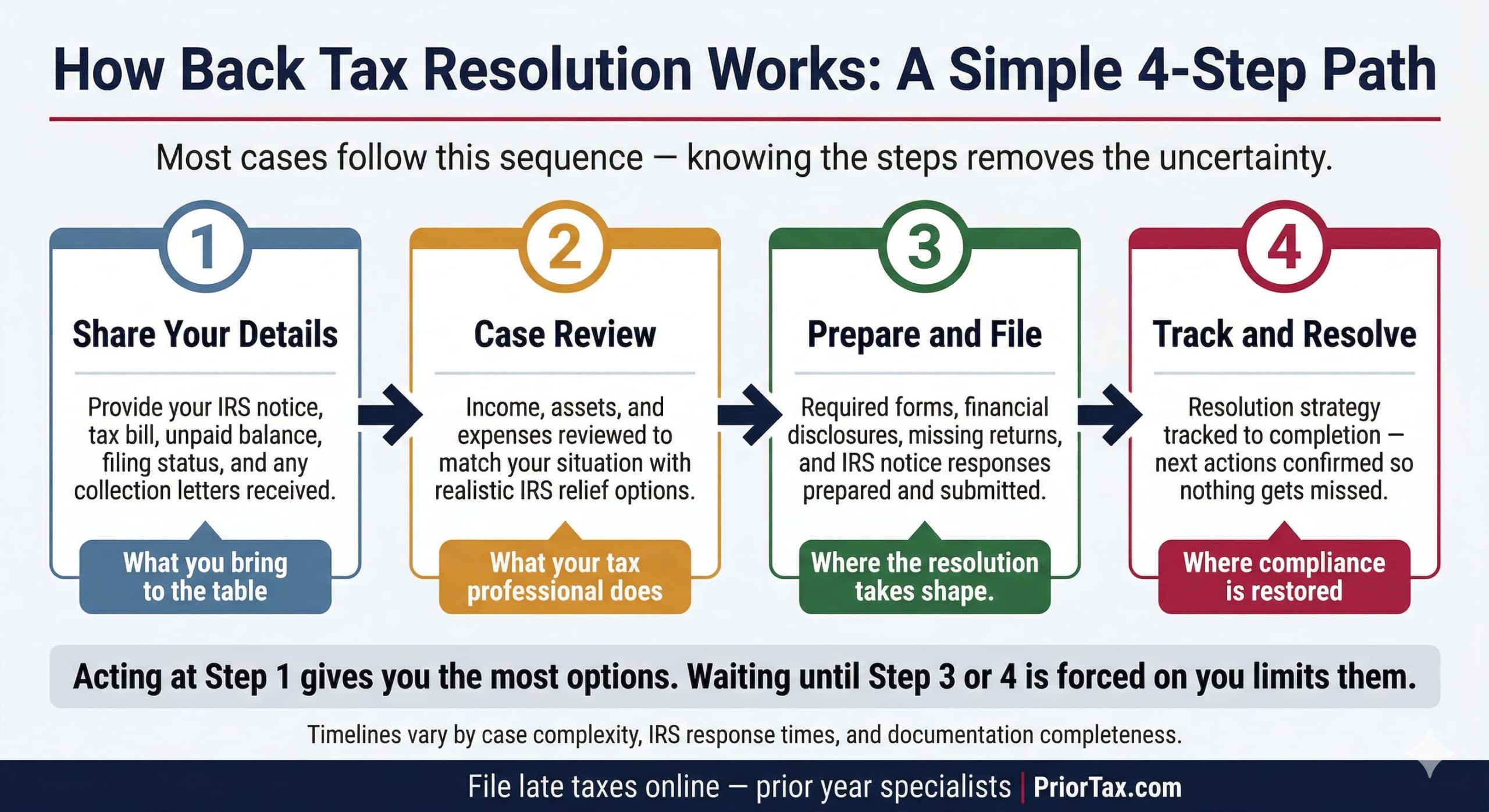
Most cases follow a straightforward process. First, share your notice, tax bill details, unpaid balance, and filing status so the problem is defined clearly.
Next comes a review of income, assets, and expenses to match you with realistic tax debt relief options. After that, required filings, forms, or responses are prepared, then the resolution strategy is submitted and tracked so the next actions do not get missed.
Work With a PriorTax Pro Focused on Compliance and Accuracy
Tax problems get worse when forms are incomplete or the wrong relief request is filed.
Licensed tax professionals and other credentialed tax professionals can help reduce that risk by reviewing records carefully and keeping the case centered on compliance.
Experience matters when the issue involves IRS notices, installment agreements, IRS hardship reviews, unfiled returns, or state tax debt. If a case also involves delays or unresolved hardship issues, the Taxpayer Advocate Service, also called TAS, may be relevant in limited situations involving the Internal Revenue Service.
Signals That Build Confidence
Useful trust signals are simple and verifiable: licensed or credentialed representation where applicable, experience with federal tax debt and state tax debt cases, and direct work on notice response, payment plans, and unfiled return matters.
Straight Answers to Common Concerns
Cost depends on the work involved. Fees usually vary based on case complexity, the number of unfiled tax returns, the type of tax resolution pursued, and how much documentation is needed.
Expectations also need to stay realistic. The IRS does not erase back taxes automatically, though some taxpayers may qualify for settlement, partial payment arrangements, or temporary relief through IRS hardship or Currently Not Collectible status.
Silence usually makes things worse. Ignoring an IRS notice can increase penalties, interest, and collection activity, including wage garnishment, bank levy action, or tax lien filings, while timelines depend on filing status, document quality, and IRS response times.
Can I Fix This If I Cannot Pay in Full?
Yes. Many people resolve tax debt through a payment plan, hardship review, or other approved IRS relief program based on what they can realistically afford. Please note that for a payment plan to be accepted, the total debt must be less than $50,000.
Can the IRS Remove My Penalties?
Sometimes, yes. First Time Abatement is the most common path and is generally granted when you have a clean compliance history for the prior three years and your current filings are up to date.
Reasonable cause relief is also possible when circumstances outside your control caused the late filing or late payment. Neither option removes interest on the unpaid balance, but penalty removal alone can lower what you owe in a meaningful way.
Will Getting Help Make the Process Easier?
Usually, yes. A tax professional can help avoid weak paperwork, missed deadlines, and the wrong request, which often saves time and reduces costly mistakes.
Start Your Back Tax Review Today
Deadlines do not pause while you decide what to do.
Interest, penalties, and collection activity can keep building even when the original tax bill seemed manageable.
A prompt review can identify the next step, whether that means responding to IRS letters, fixing unfiled tax returns, setting up IRS payments, or testing eligibility for tax debt relief. Speak with someone who can review your notices, explain your options, and help you move toward compliance before the case gets harder to fix.
In short, back taxes are easier to manage when you act early, respond to notices, and choose a resolution path that fits your real financial situation.
Whether the issue involves IRS debt, state tax balances, unfiled returns, or collection pressure, the right support can help you move from uncertainty to a clear plan. Taking the first step now may help limit added penalties, protect income and assets, and put you on a more stable path toward compliance.
The First Step Is the Most Important One
Back taxes can feel like a weight that keeps growing.
But they are often more manageable once the problem is clearly reviewed and the right resolution path is identified.
Whether you need to file missing returns, respond to IRS notices, request penalty relief, or set up a payment arrangement, taking action early usually creates more options and reduces the risk of escalating collection activity
The most important step is to stop waiting.
A timely tax review can clarify how much is owed, what deadlines apply, and which tax relief solutions may realistically fit your situation. With the right strategy and documentation, many taxpayers are able to regain compliance, reduce stress, and move forward with a practical plan.

Categories: